
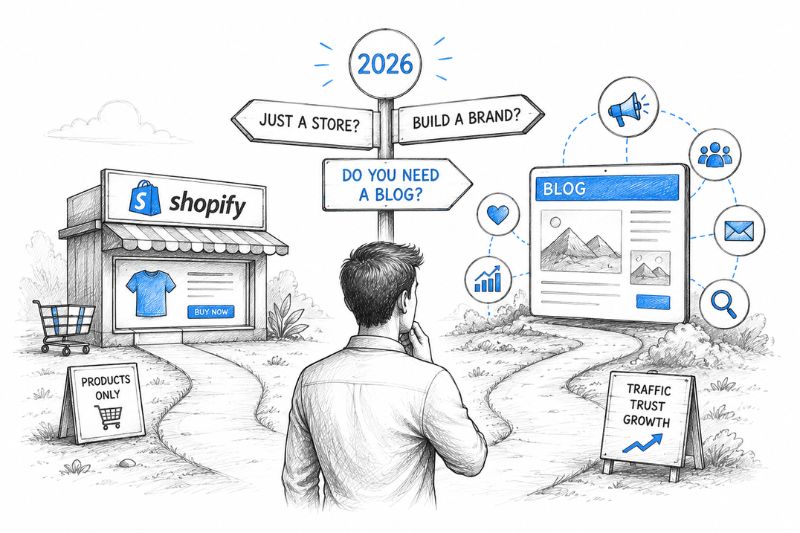
If you’re running a Shopify store in 2026, you might be wondering whether blogging is still worth the effort.
The short answer is yes.
But here’s the catch. Most ecommerce brands are doing it completely wrong.
In fact, the vast majority of Shopify blogs are little more than dead weight. They generate little to no traffic, don’t contribute to sales, and in some cases can even hurt the performance of the pages that actually matter.
The good news is that when blogging is done strategically, it can become one of the most valuable assets in your SEO strategy.
In this article, we’ll break down what successful ecommerce blogs are doing differently, the biggest mistakes to avoid, the types of content that actually drive revenue, and how to determine whether blogging is worth investing in for your niche.
Key Takeaway
- Yes, blogging is still worth it for Shopify stores in 2026, but only when it’s driven by keyword research, aligned with your products, and designed to support the customer journey.
- The ecommerce brands seeing results use blogs to build topical authority, attract qualified traffic, and guide readers toward purchases rather than publishing content for the sake of consistency.
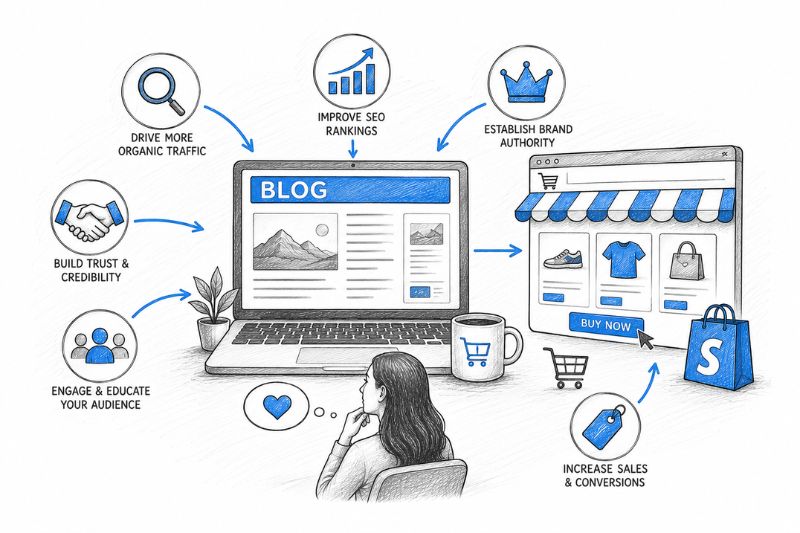
Why Blogging Still Matters for Ecommerce
Take Gymshark as an example.
Their US blog alone attracts more than 600,000 visitors every month. That’s over 7 million visits a year from organic traffic.
That kind of visibility doesn’t happen by accident.
If you’re serious about growing your ecommerce brand, increasing revenue, and building a more valuable business that could eventually be sold, blogging deserves a place in your strategy.
Without it, you’re leaving opportunities on the table while your competitors capture the traffic, attention, and sales that could have been yours.
The Four Biggest Ecommerce Blogging Mistakes
1. Publishing Mass-Generated AI Content
One of the fastest ways to waste resources is by publishing large volumes of AI-generated articles without meaningful human input.
While AI can be a useful tool during the content creation process, relying on it entirely often produces content that lacks originality, expertise, and genuine value.
Users can usually recognise when content feels robotic.
Google can too.
Content that offers no unique insight and hasn’t been shaped by human editorial expertise may generate temporary gains, but those gains rarely last. Many businesses have experienced short-lived traffic spikes followed by significant declines.
AI should support your process, not replace it.
2. Writing Generic “10 Tips” Articles
Another common mistake is publishing articles simply because they sound like something a blog should have.
Topics such as:
- 10 Tips for Better Fitness
- 7 Ways to Improve Your Morning Routine
- 12 Things to Know About Running
might sound useful, but if they aren’t backed by keyword research or tied to business objectives, they rarely generate meaningful results.
Without understanding what your audience is actively searching for, you’re essentially guessing.
3. Treating Your Blog Like a Company Diary
Founder stories and behind-the-scenes updates have their place.
The problem is when they dominate your blog strategy.
Unless you’re a household name, very few people are searching for updates about your warehouse operations or internal company milestones.
Those stories are often better suited for:
- Your About Us page
- Email newsletters
- Social media channels
Publishing too many of these articles can dilute your site’s authority and divert ranking power away from pages designed to generate revenue.
4. Ignoring Keyword Research
This is perhaps the most costly mistake of all.
Many brands publish content hoping that something eventually sticks.
Unfortunately, hope isn’t an SEO strategy.
Keyword research helps you understand exactly what potential customers are typing into Google and AI search tools when looking for products, advice, and solutions related to your niche.
Tools like Ahrefs and Semrush make this process easier, but even free tools can provide valuable insights.
The goal is simple:
Create content based on proven demand instead of assumptions.
What Successful Ecommerce Blogs Do Differently
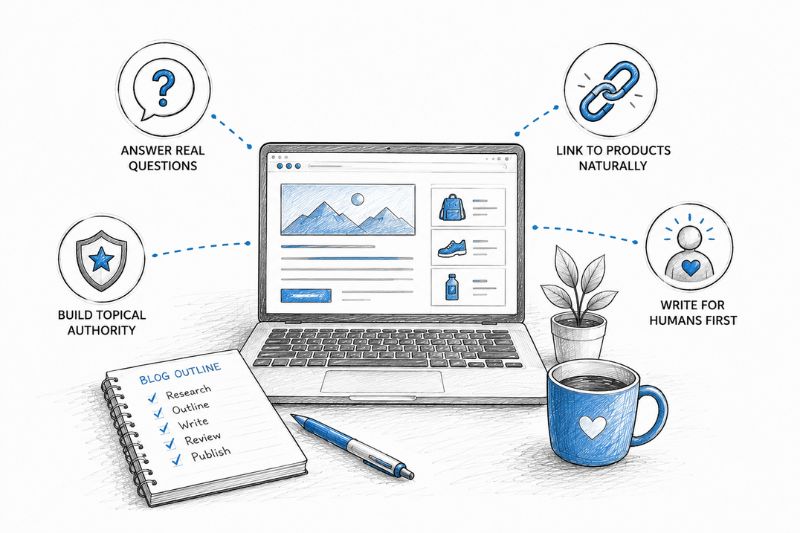
Gymshark has published hundreds of blog posts that collectively generate massive amounts of traffic.
While most brands won’t operate at that scale, the principles behind their success are surprisingly achievable.
They Answer Real Questions
Their content focuses on genuine questions their audience wants answered.
Rather than creating articles for the sake of publishing, they address actual pain points and interests that align with their products.
They Link to Products Naturally
Every piece of content creates pathways back to products and collection pages.
These internal links help readers move through the buying journey while strengthening the SEO performance of commercial pages.
They Build Topical Authority
One of the most effective strategies successful brands use is topic clustering.
Instead of publishing random articles across unrelated topics, they build content ecosystems around their product categories.
Imagine you sell sports bras.
Rather than creating a single article, you might publish content covering:
- How to choose the right sports bra
- How sports bras should fit
- How to measure sports bra size
- The best sports bras for different workouts
- Common sports bra mistakes
Over time, this signals to Google that your website is a trusted source on the topic.
The result is stronger rankings, increased visibility, and more authority within your niche.
They Write for Humans First
The best-performing ecommerce content doesn’t feel like it was written for search engines.
It prioritises the reader experience.
Only after delivering genuine value is it refined for SEO and AI discoverability.
Content that satisfies readers tends to perform better because people stay longer, engage more deeply, and are less likely to bounce back to search results.
The Three Blog Formats That Actually Drive Ecommerce Sales
Not all blog content is created equal.
If your goal is to generate revenue rather than simply publish articles, there are three formats worth prioritising.
1. Buyer Journey Content
This is arguably the most powerful type of ecommerce content.
Buyer journey content targets people who have a problem and are actively looking for solutions. Your product isn’t the focus of the article, but it becomes a natural part of the solution.
Think about the difference between these two searches:
Bottom of the funnel:
- Best sports bras
- Women’s gym shorts
- Running shoes
These keywords are highly competitive. You’re competing against established brands with massive budgets.
Now compare that to searches like:
- How to get back into working out after a break
- What should beginners wear to the gym?
- How to stay motivated to exercise
The competition is often lower, and you have an opportunity to guide readers from awareness to purchase.
For example, an article about getting back into fitness could suggest investing in a new workout outfit to boost confidence and motivation. From there, readers can naturally explore your product recommendations.
The goal isn’t to force a sale.
It’s to genuinely solve a problem while introducing relevant products at the right moment.
2. Topical Authority Content Clusters
Topical authority is becoming increasingly important in SEO.
Instead of creating isolated blog posts, successful brands build clusters of related content around their core product categories.
Let’s say you sell running shoes.
A topical cluster could include articles such as:
- How to choose running shoes
- How long should your long runs be?
- Common running mistakes beginners make
- Running shoe care tips
- How often should you replace running shoes?
Each article links back to your running shoe category page and to other related articles.
This creates two major benefits.
First, Google begins to view your website as a trusted resource on the subject.
Second, your product pages gain additional internal links that strengthen their ability to rank.
When combined with quality backlinks, topical authority becomes a powerful competitive advantage.
3. Comparison and Buying Guides
Some shoppers aren’t looking for general advice.
They’re already close to making a purchase.
They simply need help choosing between options.
That’s where comparison content shines.
Examples include:
- Adidas vs Nike running shoes
- The ultimate guide to marathon gear
- Which type of gym bag is right for you?
These readers have strong commercial intent.
You can provide an honest comparison while naturally introducing your own products as alternatives.
Because these users are further along in the buying process, conversion rates tend to be higher.
Is Blogging Worth It for Your Niche?
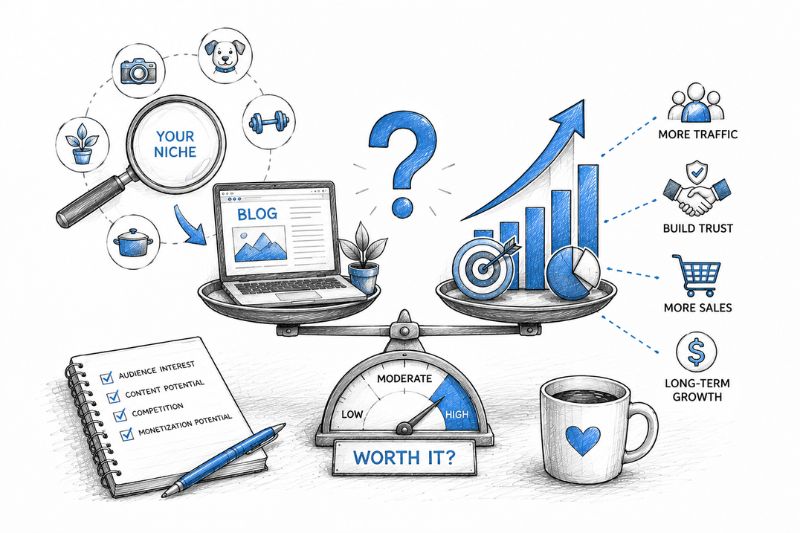
Not every ecommerce business should approach blogging in the same way.
Before investing heavily, ask yourself these three questions.
Is There Enough Search Demand?
Can you identify at least 20 relevant keywords that people are actively searching for?
Ideally, these should:
- Have measurable search volume
- Represent genuine questions
- Extend beyond product category terms
If nobody is searching for information related to your niche, blogging may not deliver meaningful returns.
Can You Connect Content to Products Naturally?
The best ecommerce content creates a logical path from education to purchase.
Ask yourself:
Can someone read this article and reasonably become interested in buying our products?
If the answer is yes, blogging has strong revenue potential.
Can You Build Topical Authority?
Could you realistically create 10 or more high-quality articles around your main product categories over the next year?
If there isn’t enough depth within your niche, maintaining momentum can be difficult.
However, if there are plenty of opportunities to educate your audience, blogging can become a significant growth channel.
Start With Product and Category Pages First
One important caveat is that blogging shouldn’t come before the fundamentals.
If resources are limited, focus first on optimising:
- Product pages
- Collection pages
- Category pages
These assets typically generate the majority of ecommerce SEO revenue.
Think of them as the foundation.
Once they’re in good shape, blogging becomes the next layer of growth that helps push those commercial pages even higher in search results.
Many stores see the biggest gains by getting the basics right before expanding into content marketing.
The Benefits of Blogging Beyond SEO
Traffic and rankings are only part of the story.
A well-executed blog can support multiple areas of your marketing strategy.
Retargeting Opportunities
Visitors who land on your blog become potential audiences for paid campaigns.
Retargeting is often one of the most cost-effective forms of advertising because you’re reaching people who already know your brand.
The more relevant traffic your blog attracts, the larger that audience becomes.
Increased Brand Awareness
Every interaction with your content builds familiarity.
Even if readers don’t buy immediately, repeated exposure strengthens trust.
When they encounter your brand again through ads, email campaigns, or social media, they’re more likely to engage.
Greater Visibility in AI Search
AI-powered search experiences rely heavily on fresh, authoritative content.
If your competitors consistently publish valuable articles while you don’t, they’re more likely to be referenced in AI-generated answers.
Blogging gives your business more opportunities to become part of those conversations.
Email List Growth
Content can also fuel your email marketing efforts.
Lead magnets such as:
- Buying guides
- Checklists
- Discount codes
- Exclusive resources
can encourage readers to subscribe.
Once they’re on your email list, you can continue nurturing those relationships through targeted campaigns.
For ecommerce brands using platforms like Klaviyo, this combination of SEO and email marketing can be incredibly effective.
Natural Backlink Acquisition
Exceptional content attracts links.
When your articles provide useful insights and answer common questions, other websites are more likely to reference them.
Those backlinks increase your site’s authority and improve the ranking potential of your product and category pages.
The benefits compound over time.
How to Find Profitable Blog Topic Ideas
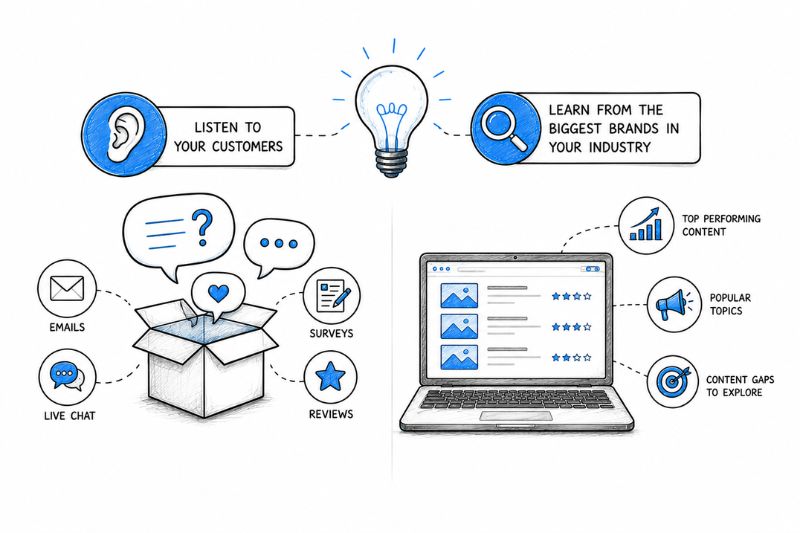
One of the biggest challenges ecommerce brands face is figuring out what to write about in the first place.
The good news is that you don’t need to reinvent the wheel.
Here are two simple ways to uncover content ideas that are already proven to work.
Listen to Your Customers
Your customers are constantly telling you what content they need.
Look at:
- Customer support tickets
- Live chat conversations
- Frequently asked questions
- Product reviews
- Social media comments
- Sales enquiries
If the same questions keep coming up, those questions deserve their own articles.
Not only does this help potential customers find answers through search, but it also reduces friction during the buying process.
For example, if customers repeatedly ask about sizing, product care, or which product is right for their situation, each of those topics could become a valuable piece of content.
Your customer support inbox can be one of the most effective keyword research tools you have.
Learn From the Biggest Brands in Your Industry
Another strategy is to study the companies dominating your niche.
Look at the brands with the largest market share and strongest online presence.
Chances are, they’re already investing heavily in SEO and content strategy.
Review the topics they’re covering and identify opportunities where you can provide a better experience.
That doesn’t mean copying their content.
Instead, ask yourself:
- Can we make this article more comprehensive?
- Can we provide better examples?
- Can we include more practical advice?
- Can we explain the topic more clearly?
- Can we create a stronger connection to our products?
Large companies often publish content at scale, but smaller brands can sometimes outperform them by producing fewer articles with greater attention to detail.
Quality and usefulness still matter.
The Final Verdict: Should Shopify Stores Blog in 2026?
Yes. If you’re serious about growing your ecommerce business, blogging still matters. But not in the way most brands approach it.
The brands seeing results aren’t publishing random articles every week and hoping something sticks.
They’re creating strategic content designed to support the customer journey. They’re answering real questions. They’re building topical authority around their products. They’re guiding readers naturally toward purchasing decisions.
And they’re strengthening the performance of their product and category pages in the process.
That said, blogging isn’t where ecommerce SEO starts. Product pages and collection pages should always come first. These are the assets most directly tied to revenue and often deliver the biggest gains.
Once those foundations are in place, blogging becomes a powerful growth lever that can:
- Increase organic traffic
- Support AI visibility
- Build trust and brand awareness
- Grow your email list
- Improve retargeting performance
- Attract backlinks
- Drive additional sales
- Increase the overall value of your business
The opportunity is still there. The brands that win in 2026 won’t necessarily be the ones publishing the most content. They’ll be the ones publishing the right content.
Final Thoughts
The ecommerce landscape continues to evolve, but one thing remains true: customers are constantly searching for answers.
If your brand can consistently provide those answers while helping people make informed buying decisions, blogging can become one of your strongest long-term marketing assets.
The key is to approach it strategically.
Focus on solving problems. Build authority around the topics that matter most to your customers. Connect your content to the products you sell. And always prioritise the reader experience over chasing algorithms.
Do that consistently, and your blog can become much more than a traffic channel.
It can become a meaningful driver of revenue and growth.
Ready to Turn Your Blog Into a Revenue Channel?
At Batlinks, we help ecommerce brands build SEO strategies that generate real business results, not vanity metrics.
Whether you need help identifying profitable content opportunities, building topical authority, optimising your product and category pages, or creating a blog strategy that actually drives sales, our team can help.
Get in touch with Batlinks today and let’s uncover the organic growth opportunities hiding within your niche.
Frequently Asked Questions
Is blogging worth it for Shopify stores in 2026?
Yes, blogging is still worth it for Shopify stores in 2026 when it’s approached strategically. Blogs that target relevant keywords, answer customer questions, and connect naturally to products can drive traffic, build authority, and increase sales.
How often should a Shopify store publish blog posts?
There is no perfect publishing frequency for every store. Consistently publishing high-quality content that aligns with customer needs is more important than posting multiple articles every week.
What type of blog content works best for ecommerce?
Buyer journey content, topical authority clusters, and comparison guides tend to perform best. These formats attract qualified visitors while helping move potential customers closer to a purchase decision.
Should I optimise product pages or blog content first?
Product and category pages should come first because they are most directly tied to revenue. Once those foundations are optimised, blogging can amplify your SEO efforts and support long-term growth.