
When we began working with this UK e-commerce brand, they weren’t struggling, but they also weren’t growing. Traffic was inconsistent, visibility was spread thin, and Google clearly didn’t see the site as an authority in its niche. Like many mid-sized e-commerce stores, they were stuck in that awkward middle zone where nothing is technically broken, but nothing is compounding either.
Twelve months later, organic revenue has increased 148%, traffic has grown almost 400%, and the domain is finally operating at the level of a real competitor in its niche.
This breakdown explains why the results happened, the actual levers that moved, not the usual SEO fluff.
1. Fixing the Structural Problems (The Part Most E-commerce Sites Ignore)
Before you can scale traffic, you have to remove the friction that’s blocking it.
The first thing we noticed was keyword cannibalisation across categories and products, quite a classic e-commerce issue. Multiple URLs competing for the same terms splits authority and confuses Google’s understanding of intent.
So we:
- consolidated competing pages
- restructured internal linking to make hierarchy obvious
- clarified which pages should rank for which intents
- removed indexable filters that were stealing impressions
This sounds basic, but the impact is not. Once Google has a clean, unambiguous structure to follow, every other SEO activity becomes exponentially more effective.
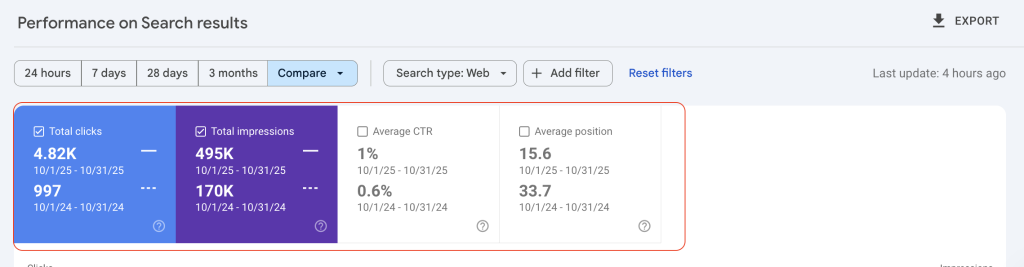
This is why the site’s impressions grew almost 3× over the year, Google finally understood the website.
2. Widening the Site’s Search Footprint
Traffic growth didn’t come from a handful of pages moving up. It came from hundreds of queries across every part of the site.
To make this happen, we:
- rebuilt category content around search intent instead of product descriptions
- added missing mid-funnel pages
- cleaned up duplicate content that diluted authority
- created topical clusters to support commercial terms
You usually don’t grow by targeting isolated keywords, you grow by building relevance across a whole product space. This is why the average position lifted so consistently across the site. When you establish clear topical coverage, Google usually rewards you everywhere, not just on individual URLs.
3. Converting Visibility Into Revenue (The Critical Part Most Case Studies Skip)
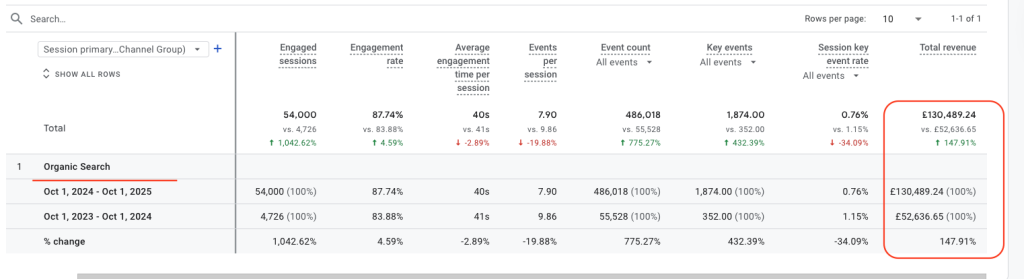
Traffic only matters if it drives sales. Over 12 months, organic revenue grew 148% (+£77,853). But here’s the nuance: this growth didn’t happen because traffic increased. It happened because the right traffic increased.
We intentionally pushed rankings for:
- category-level commercial terms
- long-tail product variations that convert better than head terms
- localised queries tied to purchase behaviour
When you look at the GA4 revenue screenshot, you can see that conversion-driven pages started to carry their weight more effectively. That’s the difference between ranking for what looks good in a report and ranking for what grows revenue.
4. The Authority Jump That Unlocked Everything Else
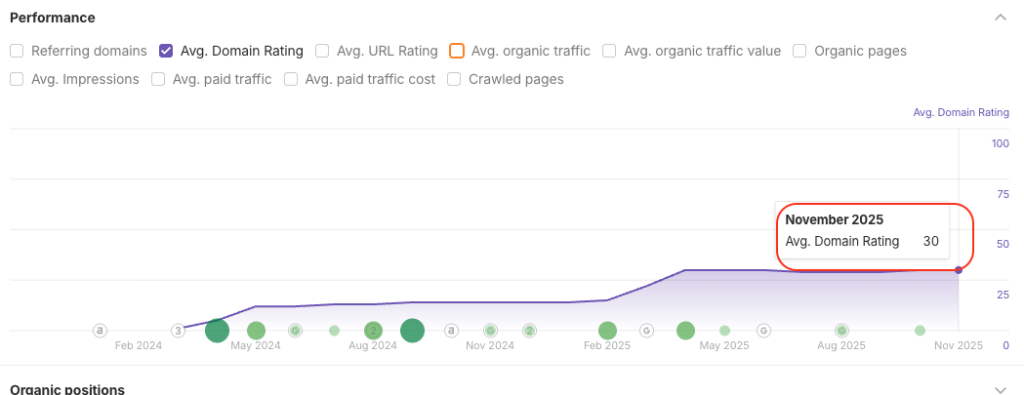
The domain’s DR went from the low teens to 30, which is a far bigger jump than most people realise.
DR is logarithmic, so moving from 10 to 20 is easy. Moving from 20 to 30 is not.
We focused on:
- link placements on relevant, high-quality publications
- anchors aligned with category themes
- consistent monthly velocity to build trust signals
This wasn’t “SEO for 2020.” This was SEO for a modern, entity-aware Google, where authority is less about raw DR and more about context and relevance. The authority lift is a big reason why product pages started ranking more reliably. Product URLs rarely rank on their own; they need domain trust to do the heavy lifting.
5. The Unexpected Win: Direct Revenue Explosion
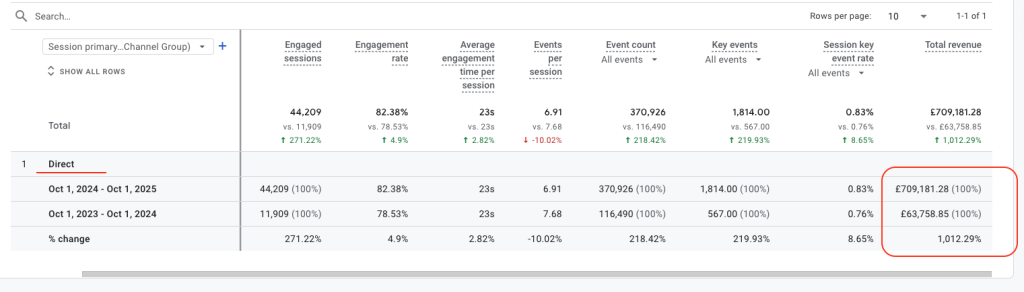
The GA4 screenshot shows a 1,000%+ increase in direct revenue. No, SEO doesn’t get 100% of the credit, but it absolutely influences it.
Why? Because when your brand shows up repeatedly across page one for weeks and months, users:
- remember you
- return via direct
- treat you as the default option in your niche
- build trust faster
Direct growth is often the lagging signal that your organic ecosystem is maturing. This is the part executives often misunderstand: SEO doesn’t only grow organic. It grows the brand.
6. What the Next 12 Months Will Focus On
The foundations are in place, and the compounding has started. Now the focus shifts from “fixing” to “dominating.”
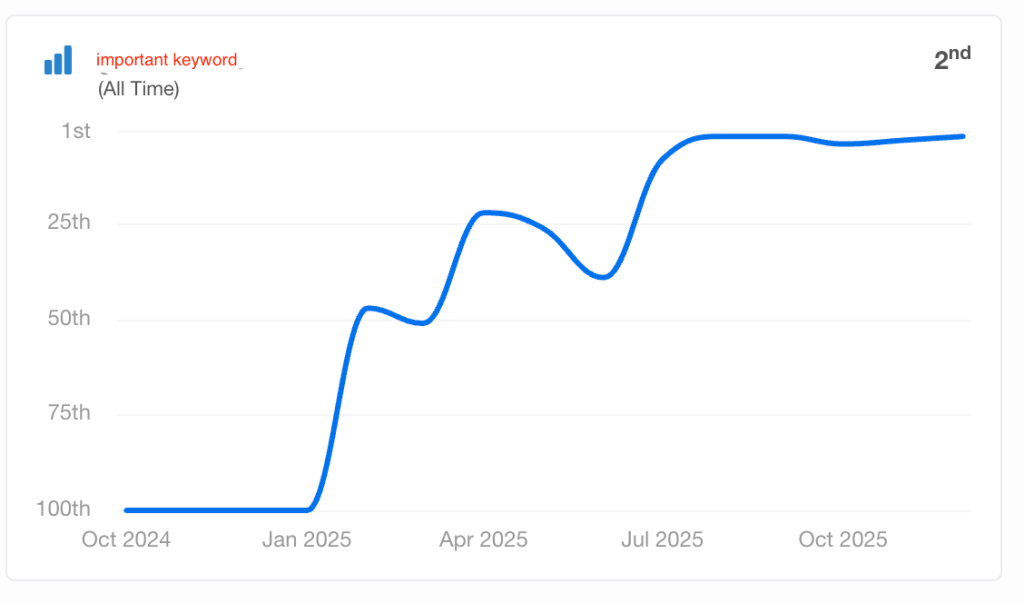
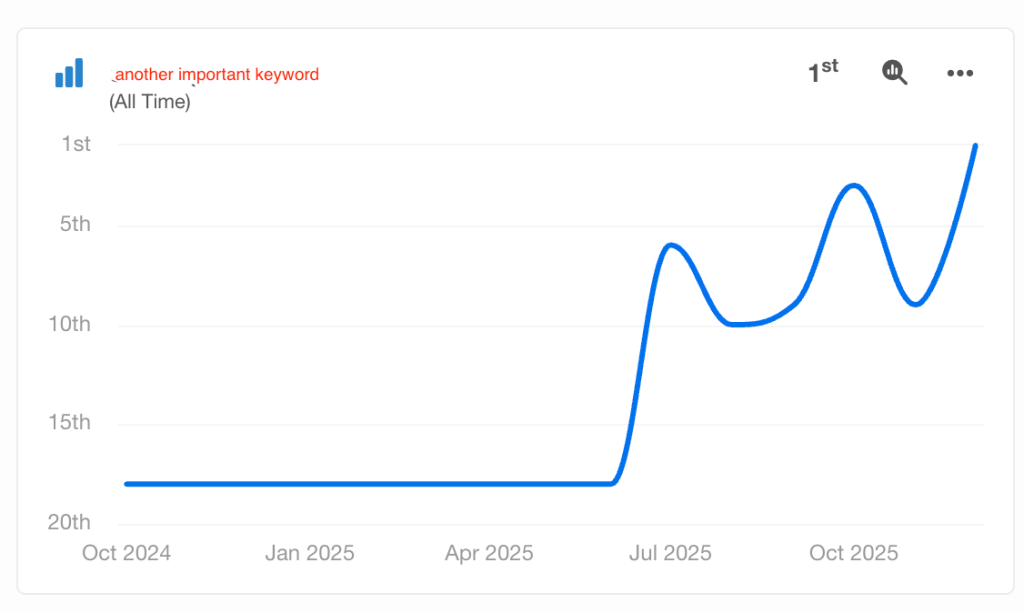
Our priorities:
- pushing core commercial terms into the top 3 (where the money is)
- increasing presence inside AI-driven search experiences
- building deeper topical authority around product clusters
- strengthening internal linking to tighten semantic relationships
The goal is to build a search presence competitors cannot replicate quickly.
Need similar results for your e-commerce site? Book a free consultation and let’s talk.
Want to See More Real-World SEO Results? 👉 View all Batlinks case studies
TL;DR: The 12-Month SEO Impact
Organic traffic: +397% (from ~4,700 to 54,000 engaged sessions)
Search impressions: 3× increase (170K → 495K)
Organic revenue: +148% (£77,853 additional revenue)
Domain Rating: doubled (low teens → DR 30)
ROI: ~150% in year one (£52K invested, £77K+ returned)
No viral keywords. No shortcuts. No lucky algorithm update. Just systematic, strategic SEO, built to compound.
Want Similar Results? Get in touch with Batlinks