
When I started managing link building at Batlinks, our process leaned heavily on manual outreach.
We spent our days researching sites, reaching out to editors and website owners, and pitching ideas that would genuinely fit their content. On paper, it looked like classic relationship-based link building.
In reality, modern link building is more complex than most people realise.
A lot of websites receive constant outreach from SEOs. Many are open to collaboration, but the process is rarely as straightforward as “send an email, build a relationship, earn a link.” Sometimes you’re speaking to a site owner directly. Other times, you’re dealing with someone who manages placements across multiple properties or works as an intermediary between brands and publishers.
That doesn’t automatically make it “bad.” But it does change what matters.
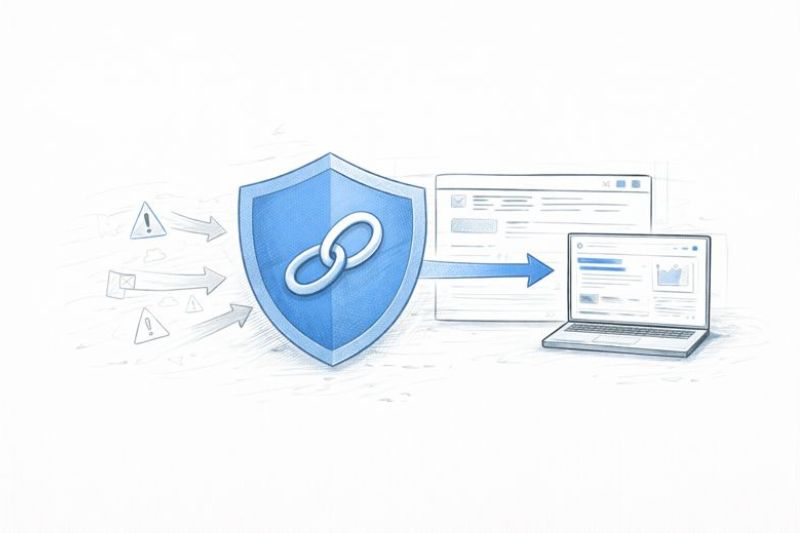
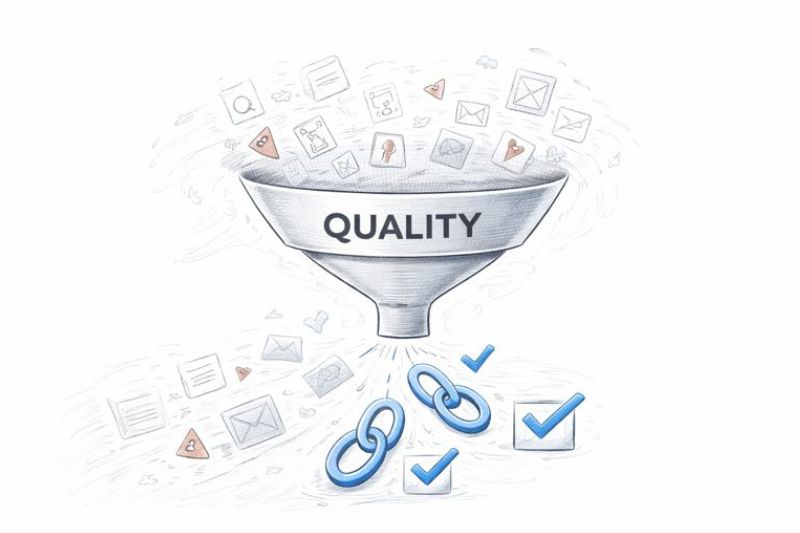
It’s not enough to be polite, persistent, and organised. What separates good link building from bad link building is the filtering, the quality control, and the willingness to walk away from placements that look good on a spreadsheet but don’t make sense in the real world.
Over time, we refined our approach.
We still do manual outreach, but we do it more selectively. The truth is: outreach at scale can become inefficient if you’re chasing every possible opportunity. The best results tend to come from being focused—prioritising the right sites, the right context, and the right content—rather than trying to brute-force volume.
Today, like most agencies operating seriously in this space, we combine targeted outreach with established publisher relationships and vetted media partners. That allows us to spend less time on dead ends and more time doing what actually protects performance: making sure every link we build is relevant, defensible, and aligned with the client’s brand.
The Difference Between “Getting a Link” and Building One
There are plenty of people who can sell you a link.
There are far fewer people who will protect your brand while doing it.
A link seller’s job is to close the deal. They’ll show you metrics, make promises, and move fast. The problem is that speed and scale don’t mean much if the end result is a placement that:
- doesn’t match your niche
- sits inside weak or irrelevant content
- creates brand risk
- disappears when a site changes direction
- never gets indexed properly
- ends up surrounded by topics your business would never want to be associated with
A link builder has a different responsibility.
My team hears the same questions from me every month:
- Is this link genuinely relevant to the client’s industry?
- Does the surrounding page make sense for a real reader?
- Would the client be proud to show this placement to their customers?
- Does this look natural in the context of the site’s content?
- Are we building something that will still be valuable six months from now?
The internet is changing fast. AI has made it harder than ever to separate real editorial content from filler. And if clients are investing in link building, they deserve links that create real value—not links that exist purely to inflate a report.
A good link builder should be proud of the placements they deliver. Not because a third-party metric looks impressive, but because the placement makes sense.
Our Biggest Obsession: ROI and Brand Safety
Link building isn’t about collecting backlinks. It’s about improving outcomes.
That means ROI has to be part of the conversation at every step.
At Batlinks, our clients approve opportunities before we move forward. That approval process matters because it keeps campaigns aligned with the client’s standards, risk tolerance, and brand voice.
But internally, we also run our own filters—because our job is to protect campaigns, not just execute them.
Sometimes that means we’ll remove an opportunity from consideration before it ever reaches the client. And in rare cases, if something changes during final checks (for example, the page quality drops, the context shifts, or the site no longer meets our standards), we’ll pause and reassess rather than forcing a placement through.
That isn’t us being difficult. It’s us doing our job.
Because the real goal is simple:
We want clients to look back at their link profile and feel confident about what they invested in—not wonder why their brand is sitting on sites they would never want to be associated with.
If the return doesn’t outweigh the spend, we have failed. That’s the standard.
The Link Building Strategies That Actually Work for Us
1) Guest Posts
Guest posts are still one of the most reliable ways to earn relevant placements when they’re done properly.
The model is straightforward:
You create useful content for a relevant site, the site publishes it, and the client earns a contextual backlink inside an article that fits the audience.
The two non-negotiables for us are:
- The page must be indexable
- The link must be crawlable and placed naturally in context
If an article never gets indexed, it won’t deliver value. And if a link is placed in a way that makes it invisible or meaningless to both users and search engines, it becomes decoration rather than an asset.
We also put real effort into the content itself.
We use an in-house group of writers and editors to ensure guest posts read like real articles written for real people—not generic filler created to “host a link.” Good editors can spot low-effort content instantly, and so can users.
A strong guest post should still make sense even if the link were removed.
That’s one of the simplest tests for quality.
2) Link Insertions
We’ve used link insertions for years, and they remain a core part of many campaigns.
A link insertion involves placing a link inside an existing article on a niche-relevant site—usually on a page that already has history, topical relevance, and visibility.
When they work, they can produce faster results than publishing a brand-new article. That’s because you’re building on a page that already has momentum.
But link insertions are also more sensitive than guest posts.
The pages you actually want are often written about competitors, alternative solutions, or adjacent topics. You have less control over the framing and the surrounding context, which means the vetting process has to be stricter.
Sometimes the fit is perfect.
Other times, we walk away—not because we can’t place the link, but because it doesn’t align with the client’s brand, positioning, or audience.
That discipline matters. The goal isn’t to place links everywhere. The goal is to place links that make sense.
3) HARO and Digital PR
HARO-style link building (and digital PR more broadly) has been part of our mix for years.
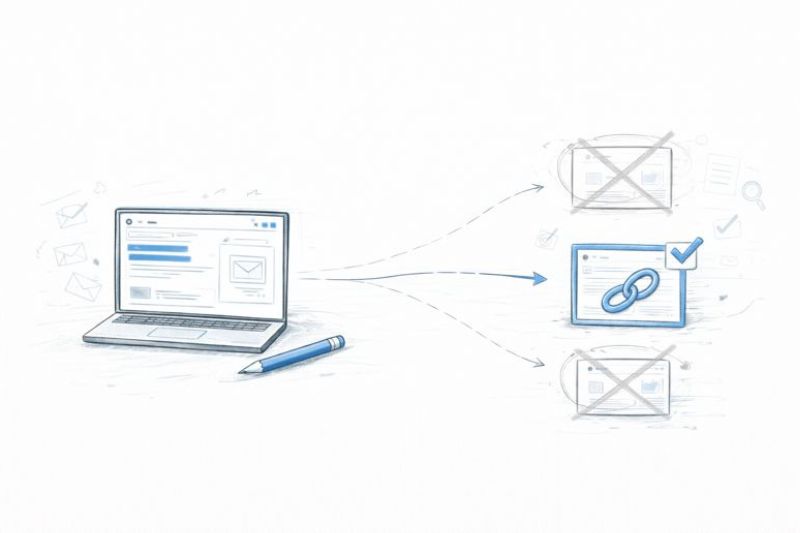
It’s not easy. You can respond to dozens of journalist requests and never hear back. But when it works, it’s one of the most valuable types of coverage you can earn.
We’ve secured placements on major sites like HubSpot and Wix, and those kinds of mentions don’t just look good in a report—they can materially shift performance and credibility.
This is one of the few areas of link building where effort still correlates strongly with quality.
The more thoughtful, useful, and genuinely relevant your response is, the better your chances of earning coverage that you simply can’t replicate through shortcuts.
Where We’re Heading Next
The rules of SEO are changing.
We’re no longer building links only for traditional search engines. We’re building brand signals across the wider web—signals that influence how platforms, audiences, and even large language models interpret credibility.
That has changed what we prioritise.
We care more than ever about:
- being featured in genuine “best of” and “top tools” articles
- appearing in the right topical clusters across the web
- building a consistent footprint of real, relevant mentions
- earning placements that make sense beyond rankings
Even nofollow mentions can carry value when they sit inside authoritative, relevant content that real people actually read.
This isn’t just about “link juice.”
It’s about credibility.
We’ll keep adapting, testing, and improving as the ecosystem changes. The goal has never been to build the most links.
The goal is to build the ones that actually mean something.