
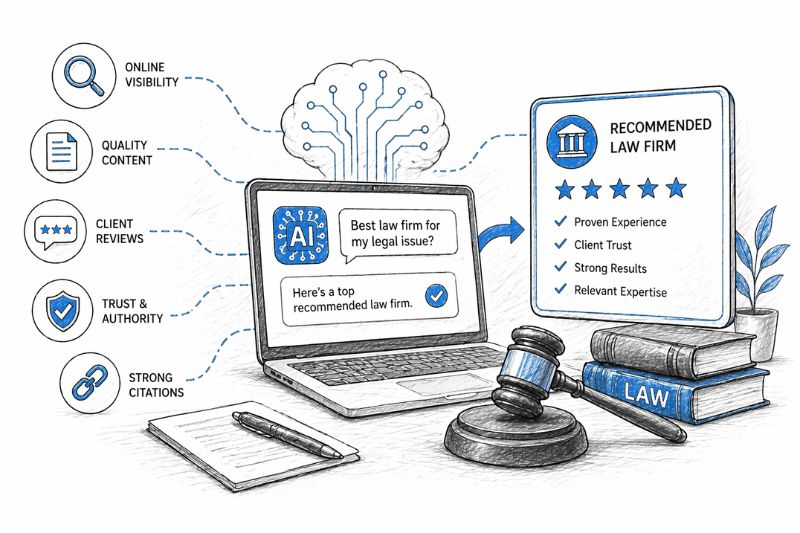
Right now, most people still rely on traditional search engines. They go to platforms like Google Search to see reviews, map listings, and familiar results they trust. However, AI-powered search through tools like ChatGPT is growing steadily. While it is still a small percentage of total searches, the growth trend is clear.
That creates an opportunity. If you position your firm early, you can gain a meaningful advantage over competitors as AI adoption increases.
See who’s winning Google & AI search in your city
I or my colleague will record a free 3–7 minute personalised video showing who ranks #1 for family law in your market — and roughly how many consultations that position earns them every month.
Let’s break down exactly how to do it.
Key Takeaway
- AI law firm recommendations are driven by how often your firm appears across high-authority directories, reviews, and third-party websites.
- To improve visibility, focus on increasing your presence across multiple platforms, strengthening your reviews, and building consistent external mentions.
Start by Reverse-Engineering AI Recommendations
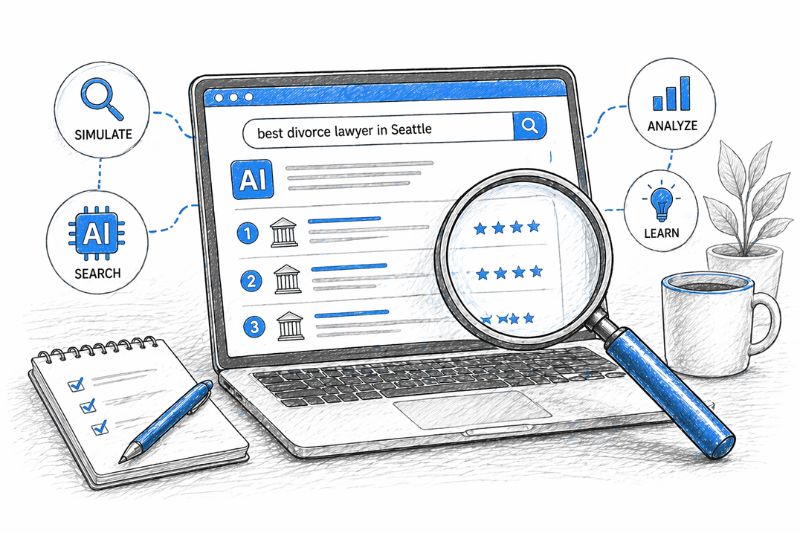
The most effective way to understand AI rankings is to simulate a real search.
Go to an AI tool and type in a query your potential client might use, such as “best divorce lawyer in Seattle.” Then review the results carefully.
Look at:
- Which firms are recommended
- What sources are cited
- How those firms are described
AI tools typically pull from third-party directories, curated lists, and authoritative platforms. You will often see sources like legal directories or review aggregators cited alongside the recommendations.
Then Analyze the Sources Behind the Rankings
Once you see where the recommendations come from, dig into those sources.
Ask yourself:
- Is your firm listed there?
- If yes, how prominently?
- If not, how can you get included?
For example, directories often highlight “top-rated” or “premium” listings. In many cases, these positions are paid placements. Firms that invest in visibility on these platforms are more likely to appear in AI-generated recommendations.
Even if you are hesitant about paid listings, understanding how these ecosystems work is critical. AI systems are reflecting the visibility signals they find across the web.
Visibility Across Multiple Platforms Is Critical
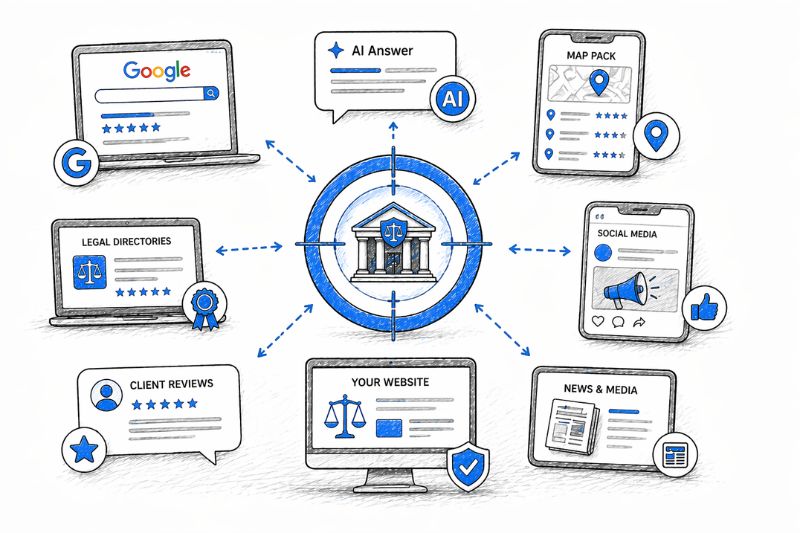
A key concept here is diversity of visibility.
AI does not rely on a single source. It looks for patterns across multiple high-authority platforms. The firms that appear repeatedly across directories, articles, and listings are more likely to be recommended.
This means your goal should be:
- Presence on major legal directories
- Inclusion in multiple “best of” lists
- Mentions across reputable websites
If your competitors are listed everywhere and you are not, they will have a clear advantage in AI search results.
Ask AI Why You Are Not Being Recommended
Here is a powerful tactic that many firms overlook.
Ask the AI directly: Why is my firm not included?
You can prompt it with something like:
“Why didn’t you include my law firm in your recommendations?”
The response often reveals:
- Which signals are you missing
- Where competitors are outperforming you
- What improvements can you make
This gives you actionable insight into how AI evaluates authority and relevance.
What AI Looks for When Recommending Law Firms
From repeated testing across industries and locations, several consistent ranking factors emerge.
Frequency of Mentions Across Trusted Sources
Firms that appear repeatedly across directories, review sites, and curated lists tend to rank higher. Consistency across multiple platforms signals credibility.
Presence on High-Authority Directories
Listings on well-known legal directories carry significant weight. Premium placements often increase visibility, which in turn increases the likelihood of being picked up by AI.
Reviews Across Multiple Platforms
AI does not just look at one review source. It considers feedback from platforms like Yelp, Google Maps, and others.
A strong review profile across multiple platforms strengthens your overall signal.
Industry Recognition and Memberships
Affiliations with recognized organizations matter. For example, membership in groups like American Academy of Matrimonial Lawyers can influence perceived authority.
Make sure these credentials are clearly displayed on your website.
Strong Media and Content Presence
Publishing high-quality content is still a core driver of visibility.
This includes:
- Blog posts answering client questions
- Guest articles on relevant websites
- Media mentions and interviews
These signals reinforce your expertise beyond directories.
Clear Niche Positioning
AI systems favor specialists. If your firm focuses on family law or high net worth divorce cases, make that explicit.
The clearer your niche, the easier it is for AI to match your firm to specific queries.
Why Some Firms Still Do Not Appear
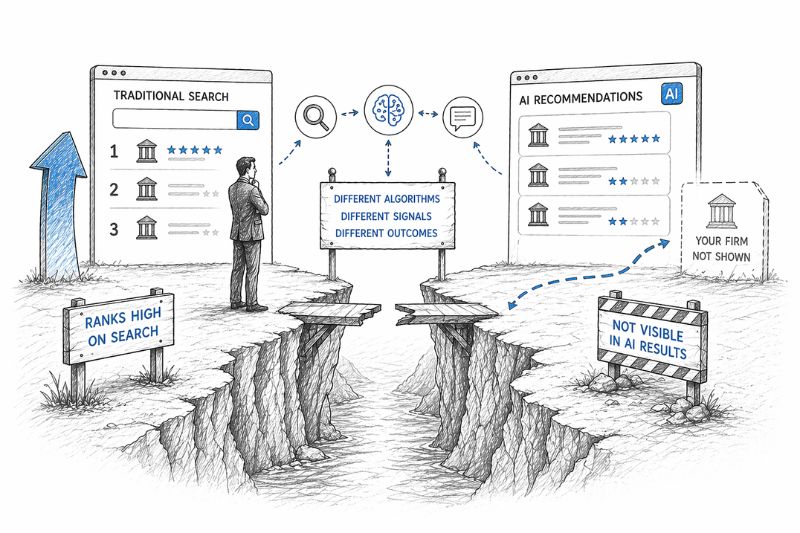
Even firms that rank highly on traditional search platforms may not show up in AI recommendations.
Common reasons include:
- Limited presence across multiple directories
- Few mentions in external publications
- Weak visibility outside their own website
In short, strong local SEO alone is not enough. AI rewards broader digital authority.
6 Steps to Improve Your AI Visibility
If you want to increase your chances of being recommended, focus on the following:
1. Expand Your Listings
Get listed on as many relevant, high-quality platforms as possible.
2. Consider Premium Placements
Evaluate whether paid listings on key directories make sense for your market and ROI.
3. Build Authority Through Content
Publish articles, contribute guest posts, and secure mentions on reputable sites.
4. Strengthen Your Review Profile
Collect reviews across multiple platforms, not just one.
5. Highlight Credentials and Achievements
Create a dedicated section on your site for certifications, memberships, and recognitions.
6. Leverage Strategic Partnerships
Exchange referrals or backlinks with non-competing firms in related practice areas.
Final Thoughts
AI-driven search is not yet a dominant traffic source. Data from analytics platforms like Google Analytics shows that most leads still come from traditional channels.
However, the trend is clear. Adoption is growing, and most businesses are not yet optimizing for it.
That creates a window of opportunity. Firms that act now can establish visibility before the space becomes highly competitive.
Ranking in AI search is not about a single tactic. It is about building consistent, widespread visibility across trusted platforms.
The firms that win are the ones that:
- Show up everywhere
- Build authority through content and recognition
- Reinforce their expertise across multiple channels
If you want to appear in AI recommendations, you need to align your strategy with how these systems gather and evaluate information.
FAQs
How do you get your law firm recommended by AI?
To get your law firm recommended by AI, you need to increase your visibility across high-authority directories, review platforms, and trusted websites. AI search tools analyze third-party signals, so consistent listings, strong reviews, and frequent mentions across multiple platforms directly improve your chances of being recommended.
What factors affect AI rankings for law firms?
AI rankings for law firms are driven by authority, consistency, and visibility across the web. Key factors include directory listings, review quality and quantity, mentions on reputable sites, and clear niche positioning, all of which help AI systems determine which firms to recommend.
Why is my law firm not appearing in AI search results?
Your law firm is likely not appearing in AI search results due to limited external visibility or weak authority signals. If your firm is not consistently listed across directories, lacks strong reviews, or has few mentions on third-party websites, AI tools are less likely to include it in recommendations.
Do reviews impact how AI recommends law firms?
Yes, reviews significantly impact how AI recommends law firms because they act as trust signals across multiple platforms. A high volume of positive, consistent reviews on sites like Google, Yelp, and legal directories strengthens your credibility and increases your likelihood of appearing in AI-generated recommendations.