
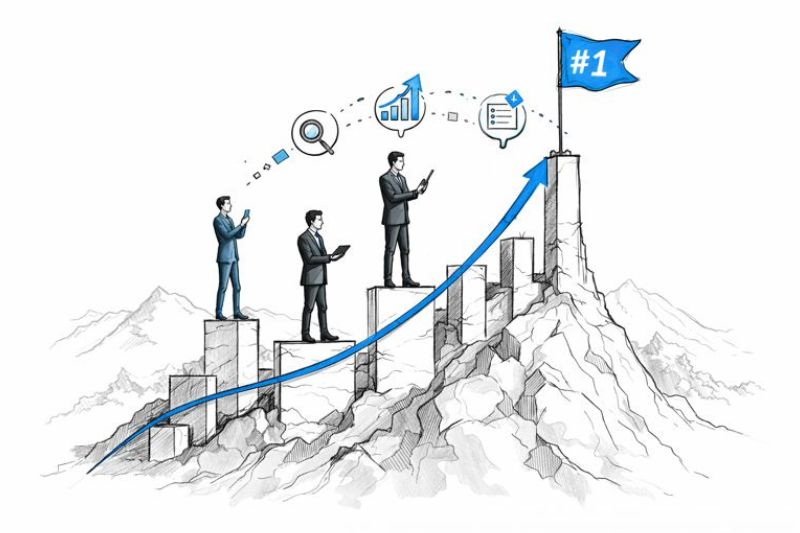
Our client is a technology-focused social media service provider operating in a highly competitive online space. Their platform is used by influencers, content creators, artists, and individuals looking to grow and monetise their social media presence.
On paper, the product was strong. In practice, organic growth wasn’t reflecting that.
Despite publishing content and offering in-demand services, organic traffic had stalled, and several high-value pages were underperforming. That’s when the client brought Batlinks in to identify what was holding growth back and build an SEO strategy capable of scaling long term.
Results Snapshot
Before diving into the details, here’s the high-level view of what this campaign achieved:
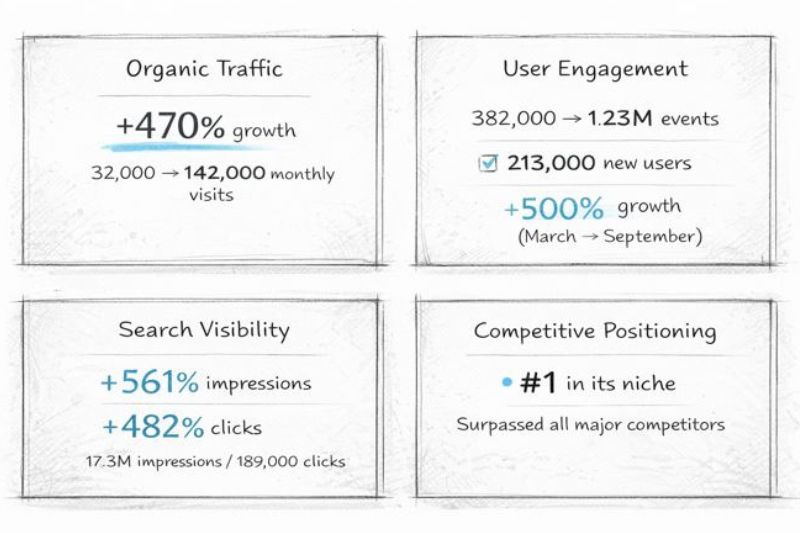
- +470% organic traffic growth (32,000 → 142,000 monthly sessions)
- +561% impressions (3.08M → 17.3M)
- +482% clicks (39,200 → 189,000)
- #1 in its niche for organic traffic, surpassing all major competitors
- 55 high-quality backlinks built (Average DR: 59)
- 500% increase in new users
Strategy Overview
Rather than trying to do everything at once, we focused on sequencing: fixing what would unlock the fastest gains first, then layering on strategies that compound over time.
1. Technical SEO Audit & Cleanup
We started where every scalable SEO campaign should: technical foundations.
A full audit revealed multiple high-impact issues, which we prioritised based on severity and potential upside.
We fixed:
- 404 errors and broken links
- Broken images
- Redirect inefficiencies
- Missing meta descriptions
- Empty or duplicated H1s
- Oversized images impacting load speed
By resolving these early, we removed friction that was slowing down every other SEO effort.
2. Low-Hanging Fruit (LHF) Page Optimisation
With the technical baseline solid, we moved on to low-hanging fruit or pages already close to winning.
We identified service pages ranking between positions 4 and 30 for primary keywords and prioritised them because they already had visibility, required less effort to move and were directly tied to revenue.
Each page was re-optimised for:
- Keyword relevance
- Search intent alignment
- Content depth and structure
- On-page clarity and internal linking
This phase produced some of the earliest ranking gains in the campaign.
3. Link Gap Analysis & Consistent Link Building
Once on-page improvements were in motion, we addressed the biggest competitive disadvantage: links.
We ran a detailed link gap analysis to understand exactly how many backlinks each priority page needed to outperform competitors.
From there, we executed a steady, monthly link-building campaign using guest posts on authoritative sitesas well as contextual link insertions on existing content
Link building results (Feb–Sep):
- 55 total backlinks built
- Average Domain Rating: 59
- Average referring site traffic: 37,000+ monthly visits
The key here wasn’t volume; it was relevance and consistency.
4. Keyword Research & Topical Authority Expansion
As rankings improved, we expanded outward.
We delivered keyword recommendations designed to support key service pages, capture high-intent search demand and build topical authority through supporting content.
Instead of chasing isolated keywords, we focused on owning topic clusters, which allowed rankings to reinforce one another over time.
5. Pruning & Content Re-Optimisation
Next came one of the highest-impact changes: content pruning.
We reviewed approximately 1,000 low-engagement pages and articles and took decisive action:
- Deindexed hundreds of thin blog and tag pages
- Merged articles with overlapping intent
- Re-optimised content with stronger keyword alignment
This reduced internal competition, improved crawl efficiency, and helped Google focus on the pages that actually mattered.
6. Keyword Cannibalisation Fixes
During the pruning process, we identified ~50 cannibalisation issues, ranging from minor overlaps to severe conflicts.
Fixes included deindexing non-essential URLs, merging competing pages and redirecting internal link equity to priority pages.
Once cannibalisation was resolved, rankings became noticeably more stable.
7. Internal Linking at Scale
To amplify everything else, we strengthened the internal link structure.
So far, we’ve:
- Interlinked ~250 articles
- Pushed authority toward priority pages
- Improved crawlability and user navigation
Internal linking became a quiet but powerful multiplier across the site.
8. Indexation Monitoring
Finally, we ensured new and updated pages were indexed quickly using an indexation tool. Faster indexation meant faster feedback loops, and earlier ranking improvements.

Results & Impact
By month nine, the results spoke for themselves.
Key Learnings
This campaign reinforced several important truths about SEO:
- Long-term SEO produces compounding returns
- Fixing technical issues early accelerates growth
- Low-hanging fruit pages drive fast momentum
- High-quality backlinks are still essential in competitive niches
- Pruning and cannibalisation fixes improve crawl efficiency
- Topical authority and internal linking strengthen site-wide rankings
- Faster indexation leads to earlier ranking movements